ad

Author: techdecodes.com

  • Crack the GRE: A Guide to Achieving Your Target Score

    Preparing for the GRE can be daunting, but with proper planning, strategy, and discipline, it can become a much more manageable and attainable challenge. It’s like a puzzle that requires you to assemble the right pieces correctly. Each piece represents a different aspect of the exam – from Verbal Reasoning to Analytical Writing – and it’s up to you to put them together to form a winning strategy. 

    To crack the GRE, you must build up your accuracy, timing, and confidence through consistent practice. This rigorous mental workout trains your mind to ingrain the essential concepts, techniques, and strategies required for success on the exam. And while breaks can be necessary for revitalizing your mind, it’s crucial to strike the right balance between study and rest to avoid burnout and information overload. 

    It’s common to hit a scoring plateau during GRE preparation, but the key is to keep pushing forward with a positive attitude and a focused study plan. As you fine-tune your GRE preparation strategy and improve your accuracy, timing, and scores in practice tests, you’ll eventually reach the peak of your abilities. When that happens, you’ll know it’s the right time to confidently take the GRE and achieve the score you’ve set your mind on. 

    Tips to crack GRE

    Cracking the GRE (Graduate Record Examination) requires a combination of GRE exam preparation strategies and persistence. Here are some GRE preparation tips to increase your chances of success: 

     1. Understand the test format: The GRE consists of three sections – Verbal Reasoning, Quantitative Reasoning, and Analytical Writing. Each section has its own structure and time limit, so it’s essential to understand what to expect before you begin studying. 

     2. Develop a study plan: Create a study schedule that fits your needs and schedule. Decide how much time you can devote to studying daily, and be realistic about your goals. Make sure to include practice tests and review sessions in your plan. 

     3. Review and practice: Use official GRE materials and resources to review the content and practice the questions appearing on the test. Take advantage of free resources such as Khan Academy, ETS (the test’s administrators) website, or free practice tests available on various sites. 

     4. Learn test-taking strategies: Become familiar with the strategy that can help you answer questions quickly and accurately. For example, learn how to eliminate incorrect answers, manage your time effectively, and use the process of elimination. 

     5. Take practice tests: Take multiple practice tests to get used to the test format and timing. Analyze your performance to identify areas where you need to improve and adjust your study plan accordingly. 

     6. Get feedback: Consider working with a tutor or taking a prep course to get personalized feedback on your strengths and weaknesses and receive advice on improving. 

     7. Stay motivated: Keep a positive attitude and stay motivated throughout the preparation process. Remember that the GRE is just one aspect of your application, and a good score doesn’t guarantee admission. 

    By following these steps and putting in the necessary time and effort, you can increase your chances of cracking the GRE and achieving your academic and professional goals. 

    Tips and test strategies for Verbal, Quantitative, and Analytical Writing Sections

    Verbal Reasoning: 

    The Verbal Reasoning section of the GRE measures a student’s ability to analyze and evaluate written material and synthesize information from multiple sources. Some tips for this section include: 

    • Practice reading academic texts like journal articles or research papers to improve your comprehension skills. 
    • Look for context clues in the text to help you understand unfamiliar words or phrases. 
    • Use the process of elimination when answering multiple-choice questions by eliminating incorrect answer choices. 
    • Pay attention to the tone and purpose of the text, as this can help you answer questions about the author’s intent. 

    Quantitative Reasoning: 

    The Quantitative Reasoning section of the GRE measures a student’s ability to understand, interpret, and analyze quantitative information. Some tips for this section include: 

    • Brush up on your math skills by reviewing introductory algebra, geometry, and arithmetic. 
    • Use logic and estimation to eliminate answer choices and narrow down the possibilities. 
    • Practice using the calculator provided on the test, as this can help you save time and avoid errors. 
    • Focus on understanding the concepts and principles behind the math problems rather than just memorizing formulas. 

    Analytical Writing:

    The GRE’s Analytical Writing section measures students’ ability to analyze an argument and write a clear and coherent response. Some tips for this section include: 

    • Practice writing essays in a timed setting to improve your speed and efficiency. 
    • Use specific examples and evidence to support your arguments. 
    • Organize your essay with a clear introduction, body, and conclusion. 
    • Use transitions between paragraphs to create a logical flow of ideas. 

    How GRE coaching can help you achieve your target score

    Here are some ways in which GRE coaching can be your secret weapon to crack the exam: 

     1. Personalized Study Plan: A GRE coaching program will provide you with a personalized study plan based on your strengths and weaknesses. This plan will help you to focus your study efforts on the areas that you need to improve the most. 

     2. Expert Guidance: The coaches are experienced in coaching students for the GRE and can provide you with expert guidance on how to approach each section of the test. They will also give you tips and tricks to help you solve questions quickly and accurately. 

     3. Timed Practice Tests: Timed practice tests are essential to GRE preparation. A GRE coaching program will give you access to timed practice tests that simulate the actual GRE. This will help you get used to the test format and improve your time management skills. 

     4. Feedback and Support: GRE coaching provides feedback on your performance and support to help you overcome any challenges you may face while preparing for the test. The coaches can help you identify areas where you need improvement and provide strategies to overcome these challenges. 

     5. Motivation and Accountability: Preparing for the GRE can be long and arduous, and it is easy to lose motivation. A GRE coaching program provides you with the motivation and accountability to stick to your study plan and achieve your desired score. 

    In summary, GRE coaching can be your secret weapon to crack the exam by providing you with a personalized study plan, expert guidance, timed practice tests, feedback and support, and motivation and accountability. With the help of a coaching program, you can improve your chances of achieving your desired GRE score. 

    Ready to take your GRE preparation to the next level and achieve your target score? Consider enrolling in a GRE coaching program if you are looking for the best GRE coaching in the country. Connect with one of our experts now.

  • How to send GRE and TOEFL scores to the University?

    When applying to universities, students often need to send their GRE and TOEFL score cards to the institutions they are interested in. However, the process of sending scores can be confusing and time-consuming. This article provides a step-by-step guide on how to send GRE and TOEFL scores, as well as common issues that students may face and answers to frequently asked questions. 

    Test Score Fees

    After taking GRE and TOEFL, you have the option to send the scores to the institution of fellowship programs of your choice. Here are two key aspects of the GRE & TOEFL test score reporting fee: 

    • Score Recipients: On the test day, you can select up to four institutions or programs to receive your GRE or TOEFL test scores without any additional charges. 
    • Additional Score Report: If you want to send your TOEFL or GRE scores to more than the initial four institutions, each additional scores comes with a fee. The fee for both GRE and TOEFL are mentioned below for you.  

    TOEFL Additional Score Reports: ₹ 1,950 each  

    GRE Additional Score Reports: ₹ 2,900 each 

    How to send GRE scores?

    To send your GRE exam score, you need to follow these steps: 

    1. ​​​Log in to your ETS account. 

     2. Under the “My Test” section, select “Score Recipients.”

     3. Search for the institutions or organizations you want to send your scores to by entering their names in the search box or by browsing the list of institutions.

     4. Once you have selected your score recipients, click “Continue” and review your order.

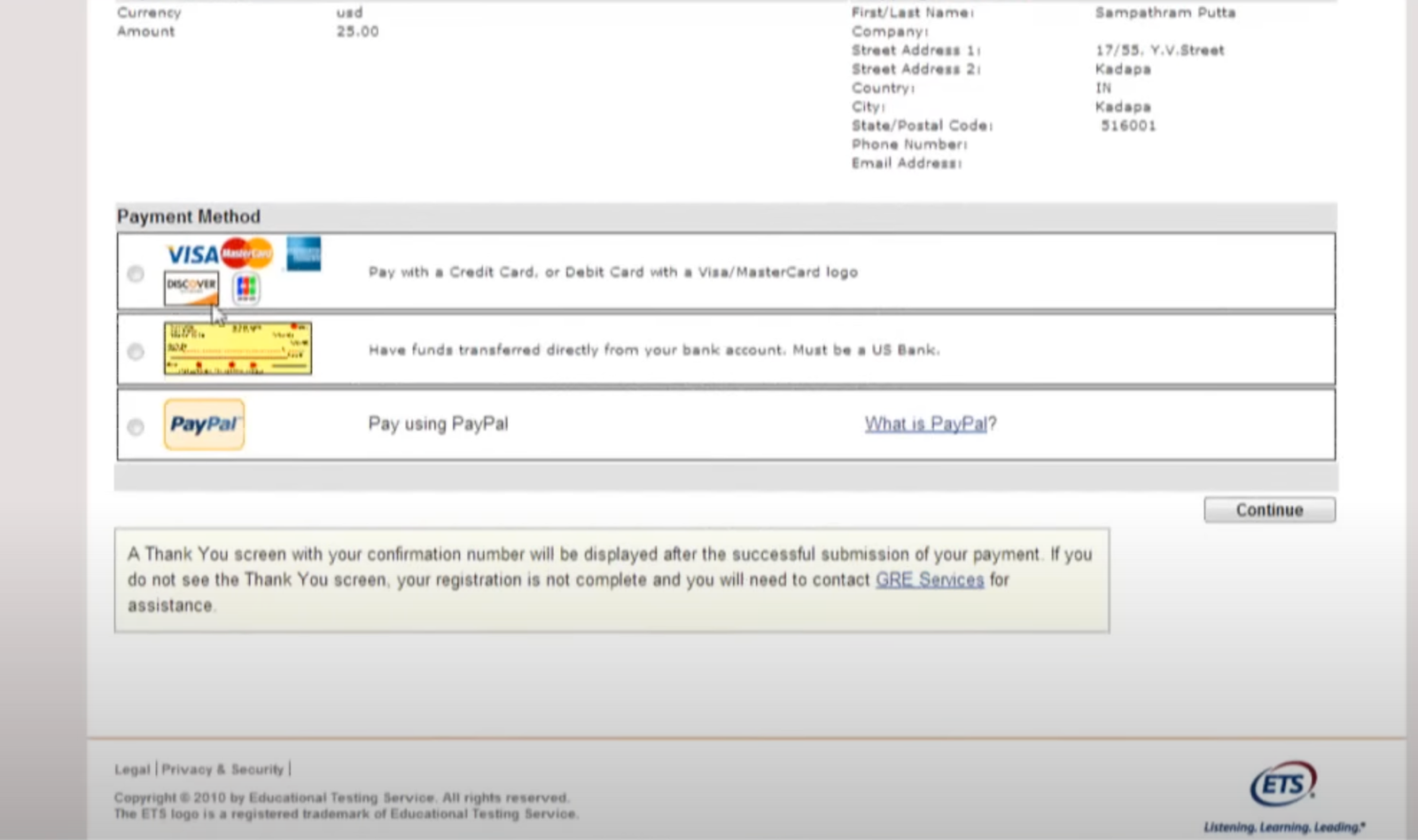
     5. Enter your payment information and submit your order.

    You can also send your scores by phone or mail by contacting the GRE Program. Please note that there may be additional fees for phone and mail orders.

    How to send TOEFL scores?

    To send your TOEFL test score, you can follow these steps:

    1. Log in to your ETS account on the TOEFL website.

     2. Click on “Send Additional Score Reports” from your account home page.

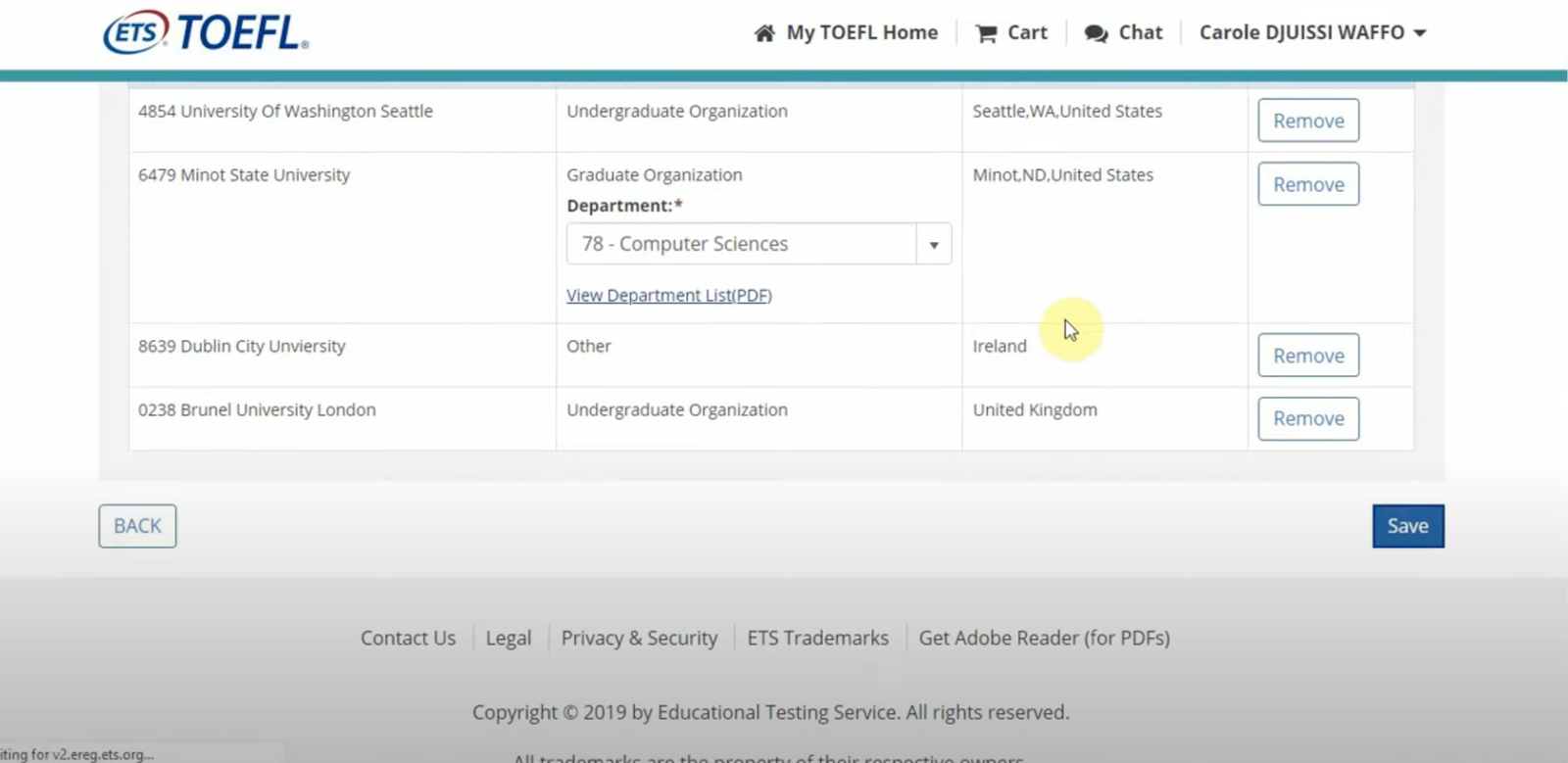
     3. Select the destination(s) to which you want to send your score reports. You can choose up to four institutions or agencies to receive your scores.

     4. Enter the required information for each institution, such as the name and address, and pay the required fee for each destination. 

     5. Review your order and submit it.

    You can also send additional score reports by phone, mail, or fax, but the fastest and most convenient way is to use your ETS account online. Remember that it may take up to 10 days for the institution to receive your score report, so plan ahead and send your scores well before any application deadlines.

    Common problems faced by students

    There are a few common problems that students may face when sending their TOEFL and GRE scores. Here are some of them:

    1. Technical issues: Technical issues, such as a slow internet connection or a problem with the ETS website, can cause difficulties in sending TOEFL & GRE scores. To avoid this, it’s best to make sure you have a reliable internet connection and to complete the process during a time when the website is less busy.
    2. Incomplete or incorrect information: Students may forget to enter all of the required information or enter incorrect information for the recipient institution. This can result in the score report being sent to the wrong place or being delayed. It’s important to carefully review all information before submitting the request.
    3. Delays in processing: ETS can take several days to process score report requests, especially during peak periods. Students should plan ahead and send their scores well in advance of any application deadlines.
    4. Payment issues: Payment problems, such as an expired credit card or insufficient funds, can prevent the score report from being sent. Students should ensure that they have a valid payment method and that they have sufficient funds to cover the cost.
    5. Inability to access ETS account: Students may have difficulty accessing their ETS account due to forgotten passwords or other issues. In this case, they should contact ETS customer service for assistance.

    By being aware of these common issues and taking steps to avoid them, students can ensure that their TOEFL and GRE score cards are sent successfully and on time.

    Sending GRE and TOEFL scores can be an essential part of the university application process. It is crucial to follow the correct steps and avoid common issues to ensure that scores are sent successfully and on time. By following the step-by-step guide provided in this article and referring to the frequently asked questions section, students can navigate the process of sending scores with ease.

    If you still have questions about GRE and TOEFL, contact our team of experts to guide you through the process.

    Frequently asked questions

    Good and reputed universities usually require test scores, so if you have a good score, it is recommended to send it. It will work in your favor.


    If you provided the correct university and department code during the exam, then sending your scores again is not required. However, it is advisable to contact the department and reconfirm with them that they have received it. If not, you may need to send the scores again.


    You need to choose two codes – University code and Department Code. The codes should be available on the University website, usually in the FAQs or application guidelines or admissions page.


    You can call or email the university to get the information. If you still cannot find the codes, you can put “others” in the department code and inform them that you have sent the scores to the “other” department. Note that the institute code is compulsory – you need to know which University to select. If you are unsure, it is better to call or email the University for assistance.


    No, you can use the search feature and select your university and department.


    Some universities have a central database of scores accessible by multiple departments, in which case the department code does not matter much, and all departments will have access to the scores. In some universities, different departments do not communicate with each other, and they have their own repository of scores. In this case, you need to email and/or call the University and inquire if they will take the scores from the other department to whom you had sent it by mistake while giving the exam. Most universities will accept it, but if they don’t, you will have to resend it.


    The answer depends on the university. You need to call the different departments and inquire if they will accept the score from the other. If they do, you don’t need to send the score again.


    If you have reported your score once and then report a new score, the university will have both the scores. They usually consider the latest score, which is usually your best score. It will make a difference only if your scores have improved substantially. However, some universities might look at the scores in detail to see section-wise details, but most of them will go with the best score. With GRE Select, you can choose which score you want to send to the college. Only that score will be sent to the university, and they will not know about your other scores (unless in your first attempt, you had sent the old score). This option is not currently available for GMAT and TOEFL.


    GRE and TOEFL cutoffs vary among universities and programs. Meeting or exceeding the recommended scores can improve your chances of admission, especially for competitive programs. However, other factors may also be considered. It’s important to check with specific universities and programs to understand their policies and requirements. Thorough research is always recommended.


    It depends on the university’s policies. Some universities allow applicants to submit their applications without the test scores and then provide the scores later, while others require the scores to be submitted before the application deadline. It’s always better to check with the university beforehand to avoid any confusion or delays in the application process.


    Some universities may consider waiving the GRE/TOEFL requirement under certain circumstances, such as if the applicant has completed their undergraduate education in English or if they have work experience in an English-speaking environment. However, the waiver policies vary from university to university, and it’s best to check with them to see if you qualify for a waiver.


    Yes, you can retake the tests as many times as you want. However, you should keep in mind that some universities may only consider your best scores, while others may take an average of all your scores. It’s always better to aim for a high score in the first attempt to avoid the hassle and expense of retaking the tests.


    It usually takes about 10-15 days for the universities to receive the test scores after they have been sent. However, during peak application season, it may take longer, and it’s always better to send the scores well in advance of the application deadline to avoid any delays.


    If the university has not received your test scores even after the estimated delivery time, you should contact the testing agency and inquire about the status of the scores. If the scores have been sent, but not received, the agency will resend them. If there was an error in sending the scores, you may have to resend them again.


    GRE/TOEFL scores are an important part of the admission process, but they are not the only factor that universities consider. Other factors such as your academic record, work experience, statement of purpose, letters of recommendation, and extracurricular activities are also considered. However, a good GRE/TOEFL score can help strengthen your application and increase your chances of getting admitted to the university of your choice.


    If the university requires the scores to be sent to a specific department along with the institution code, they will provide the department code. If they do not, you can select “Department Not Listed” as an option.


    PPI stands for “Personal Potential Index,” which is an ETS tool that provides standardized, applicant-specific information on core personal attributes that graduate deans and faculty have identified as important for success in graduate study. Your university may want this information to make better admissions decisions.


    It is okay that both scores are visible. Universities will consider the highest score. However, it’s important to ensure that ETS sends the higher score to the universities.


    You can send the universities an email to inquire about the status of your GRE score.


    It is not a problem if other university names are visible on your GRE score sheet, as it does not impact your application. However, if you want, you can crop the image to hide the names.

  • IELTS vs TOEFL iBT vs PTE vs Duolingo: Which English Proficiency Test is Right for You?

    As the demand for English language proficiency increases globally, it can be overwhelming for international students to choose the right test to demonstrate their English language abilities. Among the most widely recognised tests are: 

    • The International English Language Testing System (IELTS). 
    • Test of English as a Foreign Language (TOEFL iBT). 
    • Pearson Test of English Academic (PTE). 
    • Duolingo English Test (DET). 

    Let’s dive into each test’s unique features, advantages, and disadvantages to help international students make an informed decision. 

    IELTS

    IELTS test is a popular choice for international students seeking university admission or applying for immigration. It is accepted by over 10,000 organisations worldwide, including universities, immigration authorities, and employers. The test assesses four language skills – listening, reading, writing, and speaking. It is available in two formats: Academic and General Training. 

    Advantages: 

    • Widely accepted by universities, immigration authorities, and employers worldwide. 
    • Tests language skills required for academic and professional settings. 
    • Available in two formats – Academic and General Training. 

    Disadvantages: 

    • More expensive than other tests. 
    • Requires a more extended test duration, with the speaking section conducted face-to-face. 

    TOEFL iBT

    TOEFL exam is a popular choice for international students seeking admission to universities in English-speaking countries. It is accepted by over 11,000 universities and institutions worldwide. The test assesses four language skills – reading, listening, speaking, and writing.  

    There is a new writing task introduced called ‘Academic Discussion’ replacing Writing Independent Task 2. In this task, students will be asked to state and support an opinion on a given topic in an online class discussion. Unlike IELTS, TOEFL iBT is a computer-based test that is conducted online. 

    Advantages: 

    • Widely accepted by universities and institutions worldwide. 
    • Computer-based test with instant results. 
    • Scores are valid for two years. 
    • Test can be finished in under 2 hours. 

    Disadvantages: 

    • Expensive than other tests. 
    • Limited availability of test centres in some countries. 

    PTE

    PTE is a computer-based English language proficiency test that measures a person’s ability to communicate in academic settings. It is accepted by over 6,000 universities and institutions worldwide. The test assesses four language skills – reading, listening, speaking, and writing. 

    Advantages: 

    • Computer-based test with instant results. 
    • Offers flexible test dates and times. 
    • Tests are scored based on automated algorithms, providing unbiased results. 

    Disadvantages: 

    • Not as widely recognized as IELTS or TOEFL iBT. 
    • Limited availability of test centres in some countries. 

    Duolingo English Test

    Duolingo English Test is a relatively new entrant in the English language proficiency test market. It is an online, computer-adaptive test that measures a person’s ability to communicate in English. The test assesses four language skills – reading, writing, listening, and speaking.  

    Advantages: 

    • Affordable and easily accessible. 
    • Provides instant results and detailed feedback. 
    • It can be taken from the comfort of your own home. 

    Disadvantages: 

    • Not yet widely recognized by universities and institutions. 
    • May not accurately reflect a person’s English language abilities as it is computer-adaptive. 

    Comparison of IELTS, TOEFL iBT, PTE, and Duolingo Test Formats

    IELTS: 

    • Listening: Four sections, 40 questions, 30 minutes. 
    • Reading: Three sections, 40 questions, 60 minutes. 
    • Writing: Two tasks, 60 minutes. 
    • Speaking: Face-to-face interview, 11-14 minutes. 

    TOEFL iBT: 

    • Listening: 28 questions, 36 minutes. 
    • Reading: Two passages, 10 questions each, 35 minutes. 
    • Writing: Two tasks, 29 minutes. 
    • Speaking: Two independent tasks, two integrated tasks, 16 minutes.  

    PTE: 

    • Listening: Eight sections, 45-60 minutes 
    • Reading: Five sections, 32-41 questions, 45-75 minutes 
    • Writing: Three sections, 20-32 questions, 30-40 minutes 
    • Speaking: Five sections, 35 seconds to 1 minute 30 seconds per question  

    Duolingo: 

    • Listening: Four parts, 2-4 questions each, 8-12 minutes 
    • Reading: Four parts, 2-3 questions each, 16-22 minutes 
    • Writing: One part, one question, 10 minutes 
    • Speaking: Three parts, 3-5 questions each, 6-8 minutes 

    Understanding Scoring Systems: IELTS vs TOEFL vs PTE vs Duolingo

    • IELTS: IELTS scores are reported on a 0-9 band scale, with each band representing a level of English proficiency. The overall band score is an average of the scores obtained in each section of the test. The four sections include Listening, Reading, Writing, and Speaking. Scores for each section range from 0-9 and are also reported separately. 
    • TOEFL iBT: The TOEFL scores range from 0-120, with each section scored on a scale of 0-30. The four sections include Reading, Listening, Speaking, and Writing. The scores from each section are combined to give an overall score. 
    • PTE: PTE scores are reported on a scale of 10-90, with 10 representing the lowest and 90 representing the highest level of proficiency. Similar to TOEFL iBT and IELTS, PTE also has four sections: Speaking and Writing, Reading, and Listening. 
    • Duolingo: The Duolingo English Test scores range from 10-160. The test includes sections on Reading, Writing, Listening, and Speaking. The test uses artificial intelligence to grade responses and determine the overall score. 

    Comparison Table:

    [wpdatatable id=163]

    In conclusion, international students must consider several factors while choosing the right test to demonstrate their English language proficiency. The decision should depend on the specific requirements of the institution or organisation they are applying to, their language abilities, test availability in their location, and their budget. The comparison table above can provide a quick overview of the features and costs of each test. 

    Ultimately, no matter which test you choose, you must dedicate time and effort to prepare for the test thoroughly. Several resources, such as sample tests, study materials, and online courses, are available online to help you achieve your desired scores. Adequate preparation can help you feel more confident and increase your chances of success. 

    Let Collegepond guide you to success abroad. Our expert counsellors help you navigate every step, from choosing the right test to acing it. Get started today.

  • France Extends Post Study Work Visa From 2 Years to 5 Years for Masters Students

    France Extends Post Study Work Visa From 2 Years to 5 Years for Masters Students

    On 13th July 2023, India’s Prime Minister, Shri Narendra Modi, released an important announcement while addressing the Indian community at LA Seine Musicale in Paris. The PM disclosed that all Indian students who are pursuing their Masters in France will now enjoy a post-study work visa extension of 5 years from the previous 2 years duration.

    France has always been a preferred study destination, especially for Indian students. The French government and Indian governments have consistently worked in harmony to assist the academic needs of Indian communities residing in France. From providing the required assistance to Indian students during the pandemic to now signing an MoU (Memorandum of Understanding) with NPCI (National Payments Corporation of India) to conduct seamless payments in the country, France continues to make the lives easier for Indian students within the country.

    With the five-year post-study work visa extension, an Indian student with a Master’s graduate degree can reap several benefits such as:

    • Ability to apply for a PR immediately after a five-year-long stay in France
    • Opportunity to enhance your professional experience with the best brand names in the country
    • Create new career avenues by applying to the best corporate firms in France

    The leap from a 2-year to a 5-year post-study work visa has unlocked doors to a plethora of work opportunities for Indian students to grasp in order to equip themselves with the skills and knowledge needed to ace their career goals. If you’re still contemplating where to pursue your Masters from, France proves to be a preferred destination. To seek any academic assistance, Book a Free 1-1 Counselling Session with our expert counsellors. Also, to access more information on studying abroad, visit the Collegepond website today!

  • Post Graduate Diploma vs Masters in Canada

    When looking to go abroad for your education, most of us gravitate towards doing a Master’s course. Doing a PG Diploma doesn’t cross our mind as we tend to think that it is not as valued and may not help us get jobs. Our decision should be based on the country we are targeting. If your goal is to study in the USA, then Master’s is your best bet as you will not get a work permit by doing a PG Diploma. But if you are looking to study further in Canada, then doing a PG Diploma could be a better option for a variety of reasons as it is valued and recognized globally and also gives you a work permit. Let’s understand the difference between both the programs

    The best analogy for students doubting the value of PGD is studying from an IIMs in India. These institutions DO NOT give a degree, but a PGDM. It’s the tag of IIM that gets you the job. On the same grounds, it’s how well you perform and network there, etc that will help you get the coveted job.

  • Navigating the IELTS Exam: A Guide to Understanding Scoring and Exam Format

    As an Indian student pursuing studies abroad, the IELTS exam is a critical milestone that one must overcome. Even though English is spoken fluently by over 125 million Indians, which exceeds the population of many English-speaking nations, it is one factor that makes many of us self-conscious. Stories about students requiring 2-3 attempts to get the required test score are all too familiar, and yet it should not be treated as a daunting challenge. As a product of the Indian education system, we have all grown accustomed to taking examinations since our early years. The key to success in any exam lies in one word: preparation. However, before diving into your IELTS preparation, it is critical to comprehend the exam format, content, and grading criteria. This will help you understand what to study and how to prepare effectively for the exam. This article will help you get answers to frequently asked questions about IELTS score and IELTS raw score to band conversion.

    Choosing the Right IELTS Exam: Academic or General Training?

    There are two main types of IELTS exams: Academic and General Training. The Academic IELTS exam is designed for individuals who want to study at an undergraduate or postgraduate level or seek professional registration in an English-speaking environment. This exam measures English language proficiency in academic contexts, including listening, reading, writing, and speaking. 

    On the other hand, the General Training IELTS exam is designed for individuals going to an English-speaking country for secondary education, work experience or training programs. This exam measures English language proficiency in practical, everyday contexts, including listening, reading, writing, and speaking. 

    The listening and speaking sections of both exams are the same. However, the reading and writing sections differ in content, format and difficulty level. The reading and writing sections in the Academic IELTS exam contain academic texts and tasks. In contrast, the reading and writing sections in the General Training IELTS exam include more general texts and tasks.

    What is the minimum requirement for you?

    The minimum IELTS band requirement depends on the purpose for which you are taking the exam. The IELTS exam requirements vary depending on the institution or organization that requires the test. Here are a few examples of minimum IELTS band score requirements for international students: 

    • University of Oxford (UK): minimum IELTS band score of 7.0 for undergraduate and 7.5 for graduate programs. 
    • Massachusetts Institute of Technology (MIT) (USA): minimum IELTS band score of 6.5 for undergraduate and graduate programs. 
    • University of Melbourne (Australia): minimum IELTS band score of 6.5 for undergraduate and graduate programs. 
    • University of Auckland (New Zealand): minimum IELTS band score of 6.0 for undergraduate and 6.5 for graduate programs. 
    • University of Toronto (Canada): minimum IELTS band score of 6.5 for undergraduate and graduate programs. 

    It’s important to note that these are just a few examples. The minimum IELTS band score requirements for international students may vary depending on the institution and program of study. It’s always a good idea to check with the institution you are applying to determine the specific requirements for international students. 

    Understanding all four sections of IELTS

    The Academic IELTS exam consists of four sections designed to test different aspects of English language proficiency. These sections are: 

     1. Listening: The Listening section consists of four recordings of native English speakers that are played only once. Test takers must listen to each recording and answer a series of questions related to the recording. The recordings and questions become progressively more difficult as the test progresses, and the total time for the Listening section is approximately 30 minutes. 

     2. Reading: The Reading section consists of three long texts from books, journals, magazines, and newspapers. Test takers must read each text and answer a series of questions related to the text. The texts become more difficult as the test progresses, and the total time for the Reading section is approximately 60 minutes. 

     3. Writing: The Writing section consists of two tasks that test takers must complete in 60 minutes. Task 1 requires test takers to describe and interpret a graph, chart, table, or diagram in at least 150 words. Task 2 requires test takers to write an essay in response to a given prompt in at least 250 words. Test takers are evaluated based on their ability to address the task, organize their ideas, use appropriate vocabulary and grammar, and express their opinions clearly and coherently. 

     4. Speaking: The Speaking section consists of a face-to-face interview between the test taker and an examiner. The interview is divided into three parts and takes approximately 11-14 minutes to complete. In Part 1, the test taker is asked general questions about themselves and their interests. In Part 2, the test taker is given a topic and asked to speak for two minutes. In Part 3, the test taker and examiner engage in a more in-depth discussion related to the topic in Part 2. 

    Is there a difference between written and computerized tests?

    Here is a difference between the written and computerized versions of the IELTS exam. The content and format of the exam are the same, but the delivery method is different. Test takers answer questions on a paper-based answer sheet in the written version, while in the computerized version, test takers answer questions on a computer. The Speaking section is still conducted face-to-face with an examiner for both versions. Students must choose wisely because this is a time-based exam, and they need assistance properly, depending on whether they are more comfortable with a written or computer-based exam. 

    What is the difference Between IELTS raw scores and bands?

    The IELTS exam consists of four sections: Listening, Reading, Writing, and Speaking. The IELTS score calculation is based on a scale of 0 to 9. The scores for each section are then averaged to calculate the overall band score, which also ranges from 0 to 9. 

    The raw score for each section is based on the number of correct answers or the quality of the responses provided by the test-taker.​​ The IELTS raw score is converted to a band score using a conversion table that considers both the difficulty level of the questions and the performance of all test-takers. Below is a conversion table to better understand how raw scores are turned into band scores. 

    Conversion Table

    [wpdatatable id=162]

    How is the Academic IELTS marked?

    The Academic IELTS test is marked by certified examiners who follow a set of criteria for each exam section. 

    Listening and Reading section

    Each correct answer is given one mark for the Listening and Reading sections, and the total number of marks is converted into the IELTS nine-band scale. The scores are reported in a whole number or half bands.  

    Writing section 

    For the Writing section, examiners use an assessment criteria to give a band score for each of the four criteria: 

     1. Achievement of Task (for Task 1); Response for Task (for Task 2) 

     2. Cohesion and Coherence 

     3. Lexical Resource 

     4. Grammatical Range and Accuracy 

    The score on the task is the average as the four criteria are weighted equally. 

    Speaking section 

    For the Speaking section, examiners use an assessment criteria to give a band score for each of the four criteria: 

     1. Fluency and Coherence 

     2. Lexical Resource 

     3. Grammatical Range and Accuracy 

     4. Pronunciation 

    The score on the task is average as the four criteria are weighted equally.   

    The Overall Band Score is then calculated by taking the average of the four section scores, rounded to the nearest whole or half band. Each section is given equal weight in calculating of the Overall Band Score.  

    The IELTS exam can be the ticket to an exciting new chapter in your life, whether studying abroad or pursuing a career in an English-speaking country. To make your dreams a reality, preparing thoroughly for the exam is crucial. That means understanding the format, content, and grading criteria. Keep in mind that minimum band requirements vary depending on the institution and program of study, so it’s always wise to double-check specific requirements. Whether you choose the written or computerized exam version, the content and format are the same, with only the delivery method differing. With proper preparation and hard work, achieving a good IELTS band score is possible, paving the way for an exciting academic or professional career. And why not consider Collegepond’s IELTS coaching program, with offline and online options available to make your study abroad journey as smooth as possible? 

  • ACT vs SAT: Deciding the Right Test for Your College Journey

    The ACT vs SAT debate has always confused college students and parents involved in the complex world of college admissions. It can be challenging to compare these standardised assessments since they have significant differences in their structure, syllabus, and scoring. It’s like comparing apples to oranges. The choice of which test to take should be based on individual strengths, preferences, and academic aspirations. This comprehensive guide thoroughly examines the ACT vs SAT dialogue, shedding light on their similarities and differences. By understanding the specific features of each exam, you’ll be able to make an informed decision that aligns with your abilities and enhances your chances of success. 

    ACT vs SAT: Unravelling the Key Differences

    1. Understanding Test Duration and ACT vs SAT Time

    The ACT is a slightly longer test, with a total testing time of around 2 hours and 55 minutes (without the optional Writing section) or around 3 hours and 35 minutes (with the optional Writing section). On the other hand, the SAT has a testing time of approximately 3 hours or around 3 hours and 15 minutes (including 15 mins break). The difference in duration may be a factor to consider, especially if you prefer a shorter or longer testing experience. 

    1. Test structure and Purpose

    The SAT, developed by the College Board, tests essential skills such as critical thinking, problem-solving, and reasoning. On the other hand, the ACT, created by ACT, Inc., is a comprehensive exam that evaluates student’s knowledge in core academic subjects like Math, English, Reading, and Science. It’s important to understand the purpose and content of each test to choose the one that matches your academic strengths.

    1. Test Sections and Content Coverage

    The ACT comprises four compulsory sections: English, Math, Reading, and Science, and an optional Writing section. This broad coverage suits students who excel in diverse areas. In contrast, the SAT includes sections on Mathematics, Evidence-Based Reading and Writing (combined), and an optional Essay. The SAT’s content coverage is more focused, allowing students to showcase their abilities in specific areas. 

    1. Question Styles and Difficulty

    Regarding the ACT vs SAT, there are differences in the types of questions and difficulty levels. ACT questions tend to be straightforward and easier to understand right away. On the other hand, the SAT has more complex and challenging questions that may require more in-depth analysis and critical thinking skills. Your preferences for question style and difficulty level should be considered when making a decision. 

    1. Science Section: A Deciding Factor

    A significant distinction between the ACT vs SAT exams is the presence of a Science section in the ACT, which assesses students’ scientific reasoning and interpretation abilities. If you have a strong grasp of scientific concepts and derive enjoyment from analysing data and experimental passages, the ACT’s Science section provides an opportunity for you to excel. Conversely, if you find science challenging, the SAT may be a more suitable option for you. 

    1. Maths Sections: Complex Concepts vs. Strategic Thinking

    The ACT vs SAT include Math sections, but they vary in content and approach. The ACT exam covers various mathematical concepts, including more advanced topics. In contrast, the SAT exam focuses on essential maths skills and problem-solving techniques. While the ACT’s maths section may seem more challenging due to its broader scope, the SAT emphasises strategic thinking and applying maths concepts within real-world scenarios. 

    1. Writing Section: Optional or Obligatory

    The ACT vs SAT tests have different writing sections. The ACT allows students to include a Writing section based on their college application requirements, while the SAT requires an Essay section. It’s essential to check the specific requirements of the colleges you’re applying to decide whether to take the optional writing section.

    1. ACT vs SAT Score Comparison

    The ACT vs SAT scoring systems differ in their range, section breakdown, and additional score components. The SAT has a total score range of 400 to 1600, with separate scores for Math and Evidence-Based Reading and Writing. It also provides subscores and an optional essay score. On the other hand, the ACT uses a composite score ranging from 1 to 36, averaging the scores from the four mandatory sections. It offers subscores, an optional writing score, and a STEM score.   

    It’s worth noting that the SAT deducts points for incorrect answers, which is called the “guessing penalty.” This is meant to discourage guessing randomly. On the other hand, the ACT doesn’t take points away for wrong answers. Remember that this difference may impact how you approach answering questions and guessing strategies. 

    Choosing the Right Test: Factors to Consider

    After examining the main distinctions between the ACT vs SAT tests, it’s time to consider the factors that will aid in deciding the most suitable test for you.

    1. Academic Strengths and Preferences

    When deciding between the ACT vs SAT exams, it’s essential to consider your academic strengths and interests. The ACT’s broad curriculum-based format may be a good fit if you perform well in many subjects and have a solid academic background. However, if you excel in maths and critical reading, the SAT’s concentrated content may better showcase your abilities. 

    2. Test-Taking Skills and Strategies 

    Assess your test-taking abilities and strategies to determine whether the ACT vs SAT fit you better. The ACT requires quick time management skills, as there are many questions to be answered in a short period of time. If you work well under pressure and prefer this type of pacing, the ACT may be the better choice. However, the SAT may be more suitable for you if you prefer a slower, more focused approach with more time to dedicate to each question.

    3. College Requirements and Preferences 

    Before applying to colleges, it’s important to research their admissions requirements. Some colleges accept both the ACT vs SAT exams, but others may have a preference for one over the other. Additionally, certain colleges may have specific subject requirements, like a minimum score in the Science section or in the Essay. Selecting the test that aligns with your target colleges’ preferences will increase your chances of meeting their requirements and being accepted. 

    1. Practice and Preparation Resources

    Explore the available practice and preparation resources for both the ACT vs SAT. Familiarise yourself with the layout, question sorts, and scoring structures of each test. Take advantage of legitimate practice assessments, look at courses, on-line assets, and tutoring alternatives to assess your overall performance and identify areas for improvement. Feeling comfortable and confident with the test format can undoubtedly impact your overall performance.

    1. Future Career Goals

    Consider your future career goals and the relevance of each test to your intended field of study. While neither the ACT nor SAT is directly tied to specific professions, some fields may place more emphasis on certain skills assessed by one test over the other. For example, plan to pursue a degree in a STEM-related field. The ACT’s inclusion of a Science section may provide a better opportunity to demonstrate your scientific aptitude. 

    Choosing between the SAT and ACT is a personal decision that depends on your strengths, preferences, and college requirements. Each test has its own benefits and obstacles, and it’s essential to consider these factors carefully before deciding. Remember, your test scores are just one factor in the college admissions process. Admissions committees also consider your academic achievements, extracurricular involvement, letters of recommendation, and personal essays. To present a strong and well-rounded profile, focus on showcasing your abilities beyond just standardised testing. 
    If you are still unsure about which test to take as you embark on your journey abroad, consider scheduling a Free 1-on-1 Counselling Session with our expert counsellors.

  • Broadening Horizons: Increased STEM OPT Eligibility for International Students in the United States

    Good news for Indian students planning their higher studies in the United States! The Department of Homeland Security (DHS) and the US Immigration and Customs Enforcement (ICE) has announced the addition of the 8 new degrees to the list of postgraduate Science, Technology, Engineering, and Mathematics (STEM) OPT program. These new degrees are introduced to enhance the contribution of the students with F-1 status to fuel innovation, research, and support the economic growth in the US. Are you planning to study in the US? If YES, this article will help you understand why this news benefits you.  

    Highlights of Amendment and Benefits It Offers to Indian Students

    Indian students planning to study in the US can now avail benefits of this policy amendment. Some of the major benefits of this amendment are listed below:  

    • The new list will extend the scope of the STEM OPT program to existing students and new students planning to pursue their majors in any field of study included in the new list.   
    • The students on an F-1 visa and pursuing master’s and doctoral degrees in the STEM subjects listed on the DHS website are eligible for a 24-month extension after completing their optical practical training (OPT).  
    • DHS regularly revises the policy manual guidelines from the United States Citizenship and Immigration Services (USCIS).  
    • The USCIS amends guidelines to encourage international students pursuing STEM programs to apply for lawful permanent H-1B status, as well as an employment-based green card. 
    • This new amendment would impact F-1 students seeking 24-month extension post-completion of OPT.

    New fields added to STEM list

    1. Landscape Architecture 
    2. Demography and Population Studies 
    3. Composite Materials Technology/Technician 
    4. Institutional Research 
    5. Mechatronics, Robotics, and Automation Engineering Technology/Technician 
    6. Linguistics and Computer Science 
    7. Developmental and Adolescent Psychology 
    8. Geospatial Intelligence 

    It is essential to stay informed about these changes, as they significantly enhance the opportunities for Indian students to pursue their higher studies and find employment in the US. 

    To learn more about this new development or to seek assistance on choosing the best STEM subject that meets your interest and resonates with your career aspiration, you can contact us at Collegepond. Our experts offer support and assistance throughout the entire process, right from the university selection to meeting the admissions criteria of public and private US universities. Book your FREE 1-1 counselling session now with our experts.

  • An Overview of the Singapore Post-Study Work Visas for International Students

    A comprehensive guide to understand the different work visa options for Singapore, choose the one is most suitable and beneficial for you, and how to apply 

    Usually, one wouldn’t need any convincing for wanting to work in Singapore, but in case you still need some, here’s something to consider – As per the World Competitiveness Ranking, 2022 published by the International Monetary Fund, Singapore was ranked 1st and 2nd for the years 2021 and 2022 respectively for economic performance and 9th for both the years for business efficiency. Surely, from a career perspective, moving to Singapore (if you are eligible) for work seems like a no-brainer.  

    As a popular hub for economic activity, Singapore has seen incredible growth rates and is one of the globally recognised busiest ports. The country became the centre of a lot of commercial activity and attracted top corporate organisations from around the globe. Singapore is a popular job market for students wanting to find employment after completing their higher education in Singapore. Nevertheless, unlike European or American nations, students cannot stay in Singapore on their Student Pass (Singapore Study Visa) while looking for a job. After completing their education, as per the Post Study Work Visa duration guidelines, students can stay back for one to three months. 

    A graduate student can avail a short-term visit pass once their student pass has expired or cancelled. With this, individuals can stay in Singapore for up to 90 days. They can then hunt for work opportunities. However, while students can seek job opportunities, they cannot start working. To be able to work in Singapore, candidates should have a valid pass (work visa) in the same way as international students who want to work part-time must do so. For international students wanting to work in Singapore, there are two job categories: professionals and skilled and semi-skilled employees. 

    Types of Post Study Work Visa

    Singapore offers 4 different options for the post study work visa. 

    [wpdatatable id=135]

    We now delve deeper into each of the above-mentioned work visas in greater detail. 

    1. Employment Pass

    As per the PGWP process, an individual cannot apply for the EP; their employer or designated employment agent (EA) should submit the application. The online application service can be accessed by the student on the website of the Ministry of Manpower (MOM). The PGWP processing time is up to three weeks. On the other, should one choose to apply with an offline application, the Post Study Visa processing time rules state that the same time would be up to eight weeks. 

    Eligibility criteria for Employment Pass

    Following are the post study work visa eligibility criteria applicants looking to obtain an Employment Pass should meet: 

    • Obtaining a job offer in Singapore. 
    • Working in roles pertaining to a managerial, executive, or specialised job. 
    • Securing qualifications like a good university degree, professional qualifications, or specialised skills.  

    [wpdatatable id=136]

    If you want to assess if you qualify for an Employment Pass, you can use the following link:  

    [[Self-Assessment Tool for Employment Pass Eligibility]] 

    Duration of Employment Pass

    The Employment Pass is valid for a period of 2 years for first-time candidates, and it can be renewed for 3 years. 

    However, starting from September 2023, experienced tech professionals with skills in shortage can apply for a 5-year Employment pass. The eligibility criteria for the 5-year Employment pass are: 

    • They work in occupations listed in the COMPASS Shortage Occupations List (SOL) 
    • They earn a fixed monthly salary of at least $ 10,500 for candidates up to 36 years of age (minimum salary increasing with age up to $ 13,500 for age 45 or beyond) 
    • Pass COMPASS  with a score of at least 10 points on the Diversity criterion (C3).  

    Document Checklist for Employment Pass

    The documents required for obtaining the Employment Pass are as follows: 

    • The most recent business profile company information registered with the Accounting and Corporate Regulatory Authority (ACRA)   

    [[More Information about ACRA]]   

    • The personal information page of the candidate’s passport  
    • Certificates of education 
    • Verification proof, which confirms the genuineness of the candidate’s employment and academic record. This is required when the candidate’s qualification has been obtained from an institution not in the MOM site.  
    • Contact details (in Singapore) of the candidate 
    • Details of the short-term visit pass of immigration pass of the candidate 
    • Residential address (Singapore) of the candidate: Also make sure the details adhere to the housing requirements 
    • Address of the place in Singapore where the card will be received 
    • Details, including mobile number, email address and NRIC number, FIN or passport number, of three people who can receive the card. 
    • PDF copies of the following also need to be uploaded: 
    • Candidate’s passport page showing the date of arrival in Singapore  
    • Completed medical examination form or medical declaration form 
    • Completed declaration form (attached to the candidate’s IPA letter). The employer’s declaration of the form should be signed by an authorised human resource personnel, or an employee holding at least a managerial position.  

    Application Process for Employment Pass

    If you have an employee of foreign origin who you wish to have on your payrolls for an extended duration, you (as the employer) will need to file for an Employment Pass on the employee’s behalf. For this, you would need to follow a four-step process for applying for the Employment Pass which is described below:  


     1. Submitting the Employment Pass application 

    As part of submitting the application, here is what you would need to do: 

    • Obtain a written consent from your employee to apply for the Employment Pass on their behalf. 
    • Download the following form and send it to your foreigner employee and ask him or her to fill it up and send it back to you:  

    [[Candidate’s form for Employment Pass]]  

    The following is the list of Standard Occupations that you can refer to while filling out the Employment Pass form.  

    • Once the candidate submits the duly filled form to you, please upload the application along with the necessary documents here: 

    [[Employment Pass E-Service]] 

    • Once this is done, please pay the $105 fee for each application by GIRO, Visa, Mastercard, or Amex 
    • You can use the E-Service link provided about to track the Employment Pass applications (it is recommended to do this every 10 days). In case you are informed by the Ministry of Manpower that additional documentation is required, you can complete what is necessary using the following link: 

    [[Submit requested documents]] 

    • If the application for the Employment Pass is approved, you could log in to the Employment Pass E-Service portal to print what is called the ‘In-Principle Approval’ (IPA) Letter. You can also send the pass-holder’s copy of the IPA to your employee. The IPA will provide you 6 months during which you can ask your foreign employee to come to Singapore and get the Employment Pass issued. The IPA has a pre-approved single-entry visa for Singapore and will also state whether the employee needs to undergo a medical examination in Singapore. 

    Once an application is submitted, it is processed and you will get an update within 10 business days. 


     2. Get the Employment Pass issued 

    To get the pass issued, it has to be made certain that the employee is in Singapore. Once you have ensured that, you need to follow the following steps: 

    • Provide the information and documents after logging in to the E-Service link.  
    • Pay the appropriate post study work visa cost:   
    • $225 for each pass 
    • (If applicable) $30 for each Multiple Journey Visa 
    • Upon issuance of the pass, a notification letter, whose validity is for a month from the date it was issued, is sent to the candidate and you. As per this letter, the candidate can travel and work from Singapore while they wait for the pass card and notes any requirement of registration of fingerprints.
       

     3. Registration of fingerprints and photo

    As per the notification letter, the candidate may or may not be required to register for fingerprints and photo. If the candidate is required to, they should do it by booking an appointment to visit the Employment Pass Services Centre within two weeks. At this appointment, the candidate should carry with them their passport and appointment and notification letter.  

     4. Delivery of card 

    The card will be delivered to the given address within 5 working daysafter the candidate registers and gets documents verified at EPSC or completes the biometric details submission procedure (if required). You can check the card status by logging in to EP Service.  

    Once you receive the card, you can use the SG Work Pass app to scan the QR Code on your Employment Pass Card.

    Appealing against a rejected EP

    To submit an appeal against a rejected EP, one can log into Submit an appeal, one can log into EP Online.  

    [[Appeal against the Rejection of Employment Pass]] 

    You can do this within 3 months of the rejection of the Employment Pass. The appeal would be successful only if the issues in the rejection advisory have been addressed. You can check whether your employee qualifies for the Employment Pass by using the Self-Assessment Tool. As many as 85% of such appeals are processed within 6 weeks.

    How to renew an EP

    You can apply to renew an Employment Pass for your employee up to 6 months before the pass expires. For applying for the renewal of Employment Pass, you need to do the following: 

    • Log in to the myMOM Portal and complete the renewal form. 
    • Collect the necessary documents as mentioned on the form. 
    • Once the form has been filled, send the same along with the supporting documents via post to the following address: 

    Work pass Division, 

    Ministry of Manpower, 

    18 Havelock Road,  

    Singapore 059764  


    Once the application has been submitted, the outcome of the renewal appeal would be sent via email to the contact person mentioned in the application. 

    If the renewal appeal is successful, you will get an In-Principle Approval (IPA) letter which is valid for 3 months. The IPA will provide instructions on how to get the Employment Pass issued. 

    Once you the pass is issued, you need to check the notification to see if you need to continue using your existing card or need to obtain a new card.

    EntrePass

    An EntrePass is a kind of work visa one needs when they want to start their own business in Singapore and not work for an employer.


    Eligibility Criteria 

    You will be eligible for an EntrePass if you have started a PLC registered with ACRA.  

    You can be eligible for an EntrePass as an entrepreneur, innovator or investor. Following are the criteria that you will need to meet in order to become eligible. 


    Entrepreneur 

    The following categories list the eligibility criteria for entrepreneurs:  

    Innovator

    The following categories list the eligibility criteria for innovators:  

    • In case you, or your registered company, has an intellectual property (IP) that is registered with an approved national IP institution, make sure of the following:  
    • IP must be registered with an approved national IP institution  
    • Your IP ensures it adds advantage to your proposed business and cannot be replicated  
    • The IP should be owned by a shareholder or the company. In case a shareholder has invented the IP, an expired IP can be considered as well. 
    • If you, as an innovator, or your registered company has done research in collaboration with an institution under Agency for Science, Technology and Research (A*STAR), an Institute of Higher Learning (IHL), you need to make sure of the following: 
    • The research collaboration should be along the lines of what your business specialises in  
    • A person of contact should be appointed to verify the details of the research collaboration 
    • Your involvement in the research collaboration  
    • If you have technical or domain expertise in an area related to your proposed business, you should have achievements or received recognition. 

    Investor

    • If you are investor who has invested in businesses and, now, look to grow businesses in Singapore through an investment-related company, you have to ensure the following: 
    • Invest money in other local tech startups  
    • Provide supporting documents to show: 
    • Your track record of investing in scalable businesses  
    • Plans – including quantum, period and pipeline – to invest in other local innovative or tech startups  
    • At least 8 years’ experience as a senior management professional or executive in a large corporation.  

    Following are the business that will not be considered eligible for an EntrePass: 

    • Coffee shops, hawker centres, or food courts  
    • Bars, night clubs, or karaoke lounges  
    • Foot reflexology or massage parlours  
    • Acupuncture or herbal dispensing businesses. 
    • Employment agencies  
    • Geomancy business 

    Duration of EntrePass

    For a new EntrePass or its first renewal, the validity is 1 year, and for second renewal onwards, the validity is 2 years. 

    Documents checklist for EntrePass 

    Following is the visa documents checklist  you will be required to submit when applying for an EntrePass: 

    • Particular passport pages  
    • Previous employment testimonials in English or resume.  
    • (For businesses registered with ACRA) Company’s latest business profile or instant information from Bizfile
    • A 10-page business plan in English, talking about: 
    • Product and service offered 
    • Market analysis 
    • Operation plan 
    • Profile of management team 
    • Supporting documents, including licensing agreements, product certificates and endorsement patents 

    Depending on the category – Entrepreneur, Innovator or Investor – you will also need to provide additional documents. Follow the list below: 

    Entrepreneur

    • If you have funding from a government-recognised venture capitalist (VC) or business angel, you will need to provide documents to show a raised amount of $100,000 in funding. This document can be either an investment agreement or shareholder certificate.  
    • If you are an incubatee at a government-recognised incubator or accelerator or is part of the Accreditation@SGD programme, you need to provide an explanation as to how the incubatee or acceleratee’s work is along the lines of your business. 
    • If you are entrepreneur with a track record: 
    • Have founded and sold a tech company, you should show how you were the main decision-maker of the company along with providing profile and acquisition papers of the company. 
    • Have raised funding from investors, you should provide proof of said funding from third party investors and provide details of current or past ventures 
    • Have been incubated by an incubator or accelerator, you should provide proof that you are an incubatee at the organisation or programme. 
    • Have networks and business contacts, you should provide testimonials or letters of intent, prove how these networks can contribute to your business growth, and explain a potential monetary value of these contacts.  
    • Have received recognition for your achievements and track record, you need to provide documents supporting these achievements and explain how they would add to the growth of the business.

    Innovator

    • If you have an intellectual property (IP), you will need to provide IP registration with an approved National IP Institution. 
    • If you have a research collaboration with an IHL or research institute, you will need to prove how the research is along the lines of the business and contact details of the collaborator.  
    • If you have achieved significant milestones, you will need to give a proof of your expertise through certificates, articles or testimonials. 

    Investor

    • If you want to invest in a local company, you will need to provide documents supporting your current investments, research on your area of interest and a list of companies you are considering investing in, and provide your level of engagement with these companies through correspondences, investment agreements, etc. 
    • At the same time, if you have a track record in investment, you need to provide investment agreements, signed letters of interest/intent to local companies and shareholder certificates.  
    • If you have experience as a senior management professional or executive in a large corporation, you need to provide testimonials, resumes or CVs, profile of the companies you have worked in, and your contribution to the company. 

    Application process for EntrePass

    Following is the four-step process that you as a candidate can follow to apply for an EntrePass: 

    1. Submitting the EntrePass application 

    To submit your EntrePass application, you need to do the following: 

    • Download the EntrePass application form by clicking below  

    [[Form for EntrePass]] 

    • Complete the form as a soft copy to generate the bill reference number. Once you do this, print it out and get it signed.  
    • Pay $105 fee for each application: 

    For making the payment: 

    If you use PayNow (this is what you should do by default), you should have an internet banking account with a Singapore bank.  

    If you use Telegraphic Transfer (only if you cannot use PayNow), you will need to pay in Singapore Dollars including the charges applicable for the transfer. 

    • The application will need to be submitted through Singpass. The application should include the form, proof of payment, and required documents. The status of the processing, which takes eight weeks, can be checked online.  

    [[Submit EntrePass application]]  

    If you do not have Singpass, you can submit your application on the following link: 

    [[ Submit EntrePass application without Singpass   ]] 

    • The application is jointly assessed by the Ministry of Manpower and Enterprise Singapore and takes roughly 8 weeks. Upon the approval of the application, an in-principle approval (IPA) letter will be mailed to you. The IPA letter allows the you a time-frame of six months to come to Singapore.  

    Once an application is submitted, it is processed and you will get an update within 8 weeks (in most cases).

    Get the EntrePass issued

    To get the pass issued, one needs to be in Singapore. You need to do this within 6 months of obtaining the IPA.  

    The request can be made by the candidate or through a company representative or employment agent. If you are making the request, you will need to do so at the Employment Pass Services Centre (EPSC). If the Company representative or employment agent is making the request, they will need to log into the myMOM portal. 

    For getting the EntrePass issued, the following details and documents are required: 

    • Passport details of the candidate 
    • Contact details (in Singapore) of the candidate 
    • Details of the short-term visit pass of immigration pass of the candidate 
    • Residential address (Singapore) of the candidate: Also make sure the details adhere to the housing requirements 
    • Address of the place in Singapore where the card will be received 
    • Details, including mobile number, email address and NRIC number, FIN or passport number, of three people who can receive the card 
    • PDF copies of the following also need to be uploaded: 
    • Candidate’s passport page showing the date of arrival in Singapore  
    • Completed medical examination form or medical declaration form 
    • Completed declaration form (attached to the candidate’s IPA letter). The employer’s declaration of the form should be signed by an authorised human resource personnel, or an employee holding at least a managerial position.  

    The following are steps that need to be followed for getting the EntrePass issued: 

    For pass-holders who wish to get the pass issued over-the-counter at the EPSC  

    You can make the Visa fees payment using VISA, Mastercard, AMEX, NETS, or CashCard  

    • Upon issuance of the pass, you will both receive the notification letter by email.  

    For Company Representative/Employment Agent to get the pass issued using the EP E-Service 

    • Log in to EP E-Service and provide the information and documents. 
    • Pay the fee: 
    • $225 for each pass 
    • $30 for each Multiple Journey Visa (if applicable) 

    You can make the Visa fees payment using VISA, Mastercard, AMEX, NETS, or CashCard  

    • Upon issuance of the pass, both, you and the candidate (or employee) will both receive the notification letter by email.  

    The notification letter (obtained by EPSC or E-Service) is valid for 1 month and permits the candidate to work in Singapore while they wait for card registration process to be completed. The letter also provides clarity on where fingerprints and photo are required.

    Registration of fingerprints and photo

    As per the notification letter, the candidate may or may not be required to register for fingerprints and photo. If the candidate is required to, they should do it by booking an appointment to visit the Employment Pass Services Centre within two weeks. At this appointment, the candidate should carry with them their passport and appointment and notification letter.  

    Delivery of card

    The card will be delivered to the given address within 5 working daysafter the candidate registers and gets documents verified at EPSC or completes the biometric details submission procedure (if required). You can check the card status by logging in to EP Service.  

    Once you receive the card, you can use the SG Work Pass app to scan the QR Code on your EntrePass Card.   

    Personalized Employment Pass (PEP)

    Personalized Employment Pass is a kind of Visa that can be availed of by high-earning Employment Pass holders as well as overseas foreign professionals. The benefits of a PEP are that it is not restricted to a particular employer, and offers higher flexibility than an Employment Pass. 

    A PEP holder can: 

    • Work in a job in any sector, subject to compliance with registration requirements to practise in Singapore for professionals in the fields of medicine, pharmacy, dentistry, law, architecture, and so on 
    • Switch jobs by merely notifying the Ministry of Manpower without having to apply for a new pass 
    • Can stay in Singapore for a 6-month period continuously for searching a new job

    Eligibility Criteria

    A candidate is eligible to secure a PEP if he is: 

    • A person on an Employment Pass, and earning a fixed monthly salary of at least $ 12,000 
    • An overseas foreign professional with last drawn fixed monthly salary of at least $18,000  

    From September 1, 2023, the fixed monthly salary for both the categories would be raised to $22,500 (benchmarked to top 10% of EP holders). (Remember to update the blog after this date.)  

    Once you have the PEP, you must: 

    • Not remain unemployed while in Singapore for more than 6 months at any point of time 
    • Earn a fixed salary of at least $144,000 in every calendar year (no matter how many months you were employed). If your PEP gets approved after September 1, 2023, this salary requirement will increase to at least $270,000 per calendar year. (Remember to update the blog after this date.)  

    People who are ineligible for the PEP are: 

    • Employment Pass holders under the sponsorship scheme 
    • Freelancers/Foreigners who plans to work as a freelance basis 
    • Sole proprietors or partners or where a director is also a shareholder in an ACRA-registered company 
    • Journalists/ Editors/ Sub-Editors/ Producers

    Duration of Personalized Employment Pass

    The validity of a Personalized Employment Pass is up to 3 years and is non-renewable. 

    Application process for Personalised Employment Pass 

    Following is the four-step process that you as a candidate can follow to apply for the Personalised Employment Pass: 

     1. Submitting the Personalised Employment Pass application  

    • Download the EntrePass application form  

    [[Form for Personalised Employment Pass]]  

    • Complete the form to generate the bill reference number  
    • Print out the application form and get it signed  
    • Pay $105 fee for each application: 

    For making the payment: 

    If you use PayNow, you should have an internet banking account with a Singapore bank.  

    If you use Telegraphic Transfer, you will need to pay in Singapore Dollars including the charges applicable for the transfer. 

    • The application will need to be submitted through Singpass. The application should include the form, proof of payment, and required documents. The status of the processing, which takes eight weeks, can be checked online. 

    [[Submit Personalised Employment Pass via Singpass]]  

    If you do not have Singpass, you can submit your application on the following link:  

    [[Submit Personalized Employment Pass application without Singpass]] 

    • Upon the approval of the application, an in-principle approval (IPA) letter, which allows the candidate six months to come to Singapore, will be mailed.  

    Once an application is submitted, it is processed and you will get an update within 8 weeks (in most cases). 


     2. Enter Singapore 

    The next step is for the candidate to enter Singapore to get the pass issued. Candidates will need to ensure that they comply with the travel requirements.  


     3. Get the Personalized Employment Pass issued 

    The request can be made by the candidate or employment agent. If you are making the request, you will need to do so at the Employment Pass Services Centre (EPSC). If the employment agent is making the request, they will need to log into the myMOM portal. 

    For getting the Personalised Employment Pass issued, the following details and documents are required: 

    • Passport details of the candidate 
    • Contact details (in Singapore) of the candidate 
    • Details of the short-term visit pass of immigration pass of the candidate 
    • Residential address (Singapore) of the candidate: Also make sure the details adhere to the housing requirements 
    • Address of the place in Singapore where the card will be received 
    • Details, including mobile number, email address and NRIC number, FIN or passport number, of three people who can receive the card 
    • PDF copies of the following also need to be uploaded: 
    • Candidate’s passport page showing the date of arrival in Singapore  
    • Completed medical examination form or medical declaration form 
    • Completed declaration form (attached to the candidate’s IPA letter). The employer’s declaration of the form should be signed by an authorised human resource personnel, or an employee holding at least a managerial position.  

    The following are steps that need to be followed for getting the EntrePass issued: 

    For pass-holders who wish to get the pass issued over-the-counter at the EPSC  

    You can make the fee payment using VISA, Mastercard, AMEX, NETS, or CashCard  

    • Upon issuance of the pass, you will both receive the notification letter by email.  

    For Employment Agent to get the pass issued using the EP E-Service 

    • Log in to EP E-Service and provide the information and documents. 
    • Pay the fee: 
    • $225 for each pass 
    • $30 for each Multiple Journey Visa (if applicable) 

    You can make the fee payment using VISA, Mastercard, AMEX, NETS, or CashCard  

    • Upon issuance of the pass, both, you and the candidate (or employee) will both receive the notification letter by email.  

    The notification letter (obtained by EPSC or E-Service) is valid for 1 month and permits the candidate to work in Singapore while they wait for card registration process to be completed. The letter also provides clarity on where fingerprints and photo are required.  


     4. Registration of fingerprints and photo 

    As per the notification letter, the candidate may or may not be required to register for fingerprints and photo. If the candidate is required to, they should do it by booking an appointment to visit the Employment Pass Services Centre within two weeks. At this appointment, the candidate should carry with them their passport and appointment and notification letter.   


     5. Delivery of card 

    The card will be delivered to the given address within 5 working daysafter the candidate registers and gets documents verified at EPSC or completes the biometric details submission procedure (if required). You can check the card status by logging in to EP Service.  

    Once you receive the card, you can use the SG Work Pass app to scan the QR Code on your PEP Card

    S Pass

    With the benefit of as S Pass, those working as mid-level skilled staff can work in Singapore. To be able to secure an S Pass, you must be making $3,000 a month.  

    An employer or appointed employment agent must apply for S Pass on behalf of the applicant. If the pass holder changes jobs, the new employer has to apply for a new pass. Candidates in the financial service sector need higher salaries to qualify. 

    Qualification criteria for S Pass: 

    • You need to have a job in Singapore 
    • You need to earn a monthly income that is comparable to the top one-third of the local APT workforce by age.  

    Qualifying salaries

    [wpdatatable id=154]

    Changes to levy rates

    The Basic or Tier 1 levy rate of the S Pass is also expected to increase, as has been elucidated in the table below:

    [wpdatatable id=155]

    The rates for Tier 2 levy will remain the same – $650.

    Duration of S Pass

    The validity of a Personalized Employment Pass is up to 2 years and is renewable up to 3 years.  

    Documents Required: 

    • Personal particulars page of candidate’s passport.[Text Wrapping Break][Text Wrapping Break]If the candidate’s name on the passport differs from that on their other documents, please also upload an explanation letter and supporting documents (e.g., deed poll).   
    • Company’s latest business profile or instant information registered with ACRA. 

    If an education qualification declared in the application is from an institution not found in the application form’s drop-down list, you need to upload the following additional documents: 

    • Education certificate 
    • Verification proof from a background screening company 

    Transcripts or marksheets for all semesters stating the college attended.   

    Application procedure for S Pass: 

    As an employer of employment agency, you will need to follow the four-step process to have your employee qualify for the S Pass: 

    1. Submit the S Pass application  

    As part of submitting the application, here is what you would need to do: 

    • Obtain a written consent from your employee to apply for the Employment Pass on their behalf. 
    • Download the following form and send it to your foreigner employee and ask him or her to fill it up and send it back to you:  

    [[Candidate’s form for S Pass]]  

    • Once the candidate submits the duly filled form to you, please upload the application along with the necessary documents here: 

    [[Employment Pass E-Service]] 

    • Once this is done, please pay the $105 fee for each application by GIRO, Visa, Mastercard, or Amex 
    • You can use the E-Service link provided about to track the S Pass applications after 3 weeks. In case you are informed by the Ministry of Manpower that additional documentation is required, you can complete what is necessary using the following link:  

    [[Submit requested documents]]  

    • If the application for the Employment Pass is approved, you could log in to the Employment Pass E-Service portal to print what is called the ‘In-Principle Approval’ (IPA) Letter. You can also send the pass-holder’s copy of the IPA to your employee. The IPA will provide you 60 days during which you can ask your foreigner employee to come to Singapore and get the Employment Pass issued. The IPA has a pre-approved single-entry visa for Singapore and will also state whether the employee needs to undergo a medical examination in Singapore. 

    Once an application is submitted, it is processed and you will get an update within 3 weeks (in 85% of the cases). 

    Prepare for the foreigner employee’s arrival

    There are a few things to take care of before getting the S Pass issued.  

    Before the Candidate arrives in Singapore 

    You need to buy: 

    After the Candidate arrives in Singapore 

    If applicable, the candidate needs to be sent to a medical examination by a Singapore-registered doctor. 

    Get the S Pass issued

    To get the pass issued, it has to be made certain that the employee is in Singapore. Once you have ensured that, you need to follow the following steps: 

    • Provide the information and documents after logging in to the E-Service link.  
    • Pay the $100 fee for each pass using GIRO, Visa, Mastercard, or Amex. 
    • Upon issuance of the pass, a notification letter, whose validity is for a month from the date if was issued, is sent to the candidate and you. As per this letter, the candidate can travel and work from Singapore while they wait for the pass card and notes any requirement of registration of fingerprints.  

    Document checklist for S Pass:

    • Passport details of the candidate 
    • Contact details (Singapore) of the candidate 
    • Details of medical insurance of the candidate 
    • If deemed certified to work, you must buy the Primary Care PlanCandidate’s completed medical examination form. If certified fit to work, buy the Primary Care Planfor those who are required to have it. 
    • Details of work injury compensation insurance of the candidate 
    • Details of short-term visit pass or immigration pass of the candidate 
    • Residential address in Singapore of the candidate. The address should adhere to the housing requirements.  
    • Details of the address where the card will be delivered.  
    • Details of the people, including their mobile number, email address and NRIC number/FIN/ passport number, who will receive the card.  
    • You may also need to upload PDF copies of these documents: 
    • Candidate’s passport page showing the date of arrival in Singapore . 
    • Completed medical examination form or medical declaration form. 
    • Completed declaration form (attached to the candidate’s in-principle approval letter). The employer’s declaration of the form should be signed by an authorised human. resource personnel, or an employee holding at least a managerial position. 

    Registration of fingerprints and photo

    As per the notification letter, the candidate may or may not be required to register for fingerprints and photo. If the candidate is required to, they should do it by booking an appointment to visit the MOM Services Centre – Hall C within two weeks. At this appointment, the candidate should carry with them their passport and appointment and notification letter.  

    Delivery of card

    The card will be delivered to the given address within  5 working daysafter the candidate registers and gets documents verified at EPSC or completes the biometric details submission procedure (if required). You can check the card status by logging in to EP Service.  

    Once you receive the card, you can use the SG Work Pass app to scan the QR Code on your Employment Pass Card.  

    A post study work visa is essential for an international student who is looking to work in Singapore. The guide we have outlined above presents the various kinds of visas and their eligibility criteria, documents required and application procedures associated with the different kinds of visas.   

    One of the easiest ways of securing a post study work visa is to study from a well reputed university in Singapore. The country boasts several universities, colleges and institutions that provide a range of courses in every field of specialisation. If you are too looking to study a program of your choice, you can check out our Study in Singapore page. We would also invite you to drop your contact details below so we can schedule a one-to-one appointment for you with one of our counsellors: 

    Depending on your case and eligibility, you can apply for an Employment Pass, EntrePass, Personalized Employment Pass, or S Pass. The type of work permit you need depends on your salary and qualifications.


    You need to have a job offer from an employer in Singapore who will sponsor your work permit application. The employer will need to appeal to relevant authorities before they can hire you. The type of work permit you need depends on your salary and qualifications.  


    The processing time for a work permit varies depending on the type of pass and the sector. For an Employment Pass, it can take up to 10 days for online applications. If you are an overseas company without Singaporean registration, the Employment Pass application may take 8 weeks to process. For an S Pass, it can take up to three weeks, for EntrePass and Personalized Employment Pass, it can take up to eight weeks.   


    You can change jobs if you are on a Personalized Employment Pass. If you are not on a PEP but an Employment Pass, you can switch jobs but your new employer will need to apply for a fresh Employment Pass on your behalf.  You will also need to meet the eligibility criteria for the new work permit.


    Working in Singapore can offer you many benefits such as a high standard of living, a multicultural society, a stable economy, a low tax rate (personal income tax rates between 0 to 24% and corporate tax rate of 17%), a safe environment and a strategic location in Asia.


    Students can apply for a Long-Term Visit Pass for their family – including common-law spouse, unmarried handicapped children aged 21 and above, unmarried step-children under 21 years old, and parents (for those earning a fixed monthly salary of at least $12,000) – if they have an Employment Pass or S Pass. They also have to meet the following criteria: 

    • Earn a minimum fixed monthly salary of $6,000 
    • You are sponsored by a Singapore-registered company. 

    Documents Required  

    Common-law spouse: 

    Any one of the following: 

    • Copy of the common-law marriage certificate. 
    • An affidavit by the work pass holder and their spouse declaring that they are in a common-law relationship recognised under the laws of their home country/region. The affidavit must also be notarised in their home country/region. 
    • A letter from the home country/region’s embassy of the work pass holder or spouse acknowledging that they are in a common-law relationship recognised under the laws of their country/region.  

    Handicapped children aged 21 and above: A letter or report from a medical practitioner on the child’s condition. 

    Unmarried stepchildren under 21 years of age: 

    • A copy of the court order on the child’s custody. 
    • A letter from the other biological parent stating there is no objection to bringing the child to Singapore. 
    • Verification of Vaccination Requirements (for entry to Singapore) document issued by HPB is needed for foreign-born children who meet these conditions: 
    • Aged 12 years old and below. 
    • Applying for a new LTVP – this includes those whose LTVPs have expired or been cancelled for more than 30 days. 

    Existing DP, LTVP and Student’s Pass holders do not need this document. 

    Parents: A copy of the work pass holder’s birth certificate that states the names of the parents. 

    You will need the following information to get the pass issued:  

    • Foreigner’s passport details 
    • Foreigner’s Singapore contact details  
    • Foreigner’s current Short-Term Visit Pass (STVP) or immigration pass details 
    • Foreigner’s Singapore residential address 
    • Singapore residential or office address to receive the foreigner’s card 
    • Details of up to 3 authorised recipients to receive the card (their mobile number, email address and NRIC number / FIN / passport number)  

    You may also need to provide PDF copies of these documents to get the pass issued: 

    • Foreigner’s passport page showing the date of arrival in Singapore  
    • Completed medical examination form or medical declaration form 

    Completed declaration form (attached to the foreigner’s IPA letter)  

    If you need more time to get the pass issued as the foreigners are waiting for their medical results, you can extend their STVP. Submit this request within 1 week before the STVP expiresand upload the doctor’s memo stating the medical results collection date. 

    Check the notification letter for whether the foreigner needs to register fingerprints and photo. 

    To submit an application 

    • Log in to myMOM Portal to fill out the application and upload the required documents. 
    • Pay the $105 fee for each application.  
    • Check your application status after 3 weeks. It may take longer if additional information is required.  
    • If the pass is approved, log in to EP Online and print the in-principle approval (IPA) letter. 
    • Send the pass holder’s copy of the IPA to the foreigner. It has a pre-approved single-entry visa for the foreigner to enter Singapore. 

    After you receive the IPA, you have the following period of time to bring the foreigner to Singapore before you can get the pass issued:

    wpDataTable with provided ID not found!

    Once the dependant is in Singapore, they need to complete the following steps:

     1. Pay the fees  

    • $225 for each pass 
    • (If applicable) $30 for each Multiple Journey Visa

    2. Once the pass is issued, the foreigner and you will both receive the notification letter by email.

    The notification letter: 

    • Allows the foreigner to travel in and out of Singapore while waiting for the pass card. 
    • States if the foreigner needs to have their fingerprints and photo taken for the card registration. 
    • Is valid for 1 month from the date of issue. If the foreigner needs more time to complete the card registration procedures, you can request to extend the validity of the notification letter: 

    What you’ll need 

    For registration, you must make an appointment for the foreigner.

    wpDataTable with provided ID not found!

    The foreigner should bring along these documents for the appointment: 

    • Original passport 
    • Appointment letter 
    • Notification letter 
    • The card will be delivered to the given address within 5 working days after the foreigner registers and gets documents verified. 
    • If the foreigner does not need to register, the card will be delivered within 5 working days after checking the documents.  
    • The authorised recipients will get an SMS or email with the delivery details at least 1 working day before the delivery. 
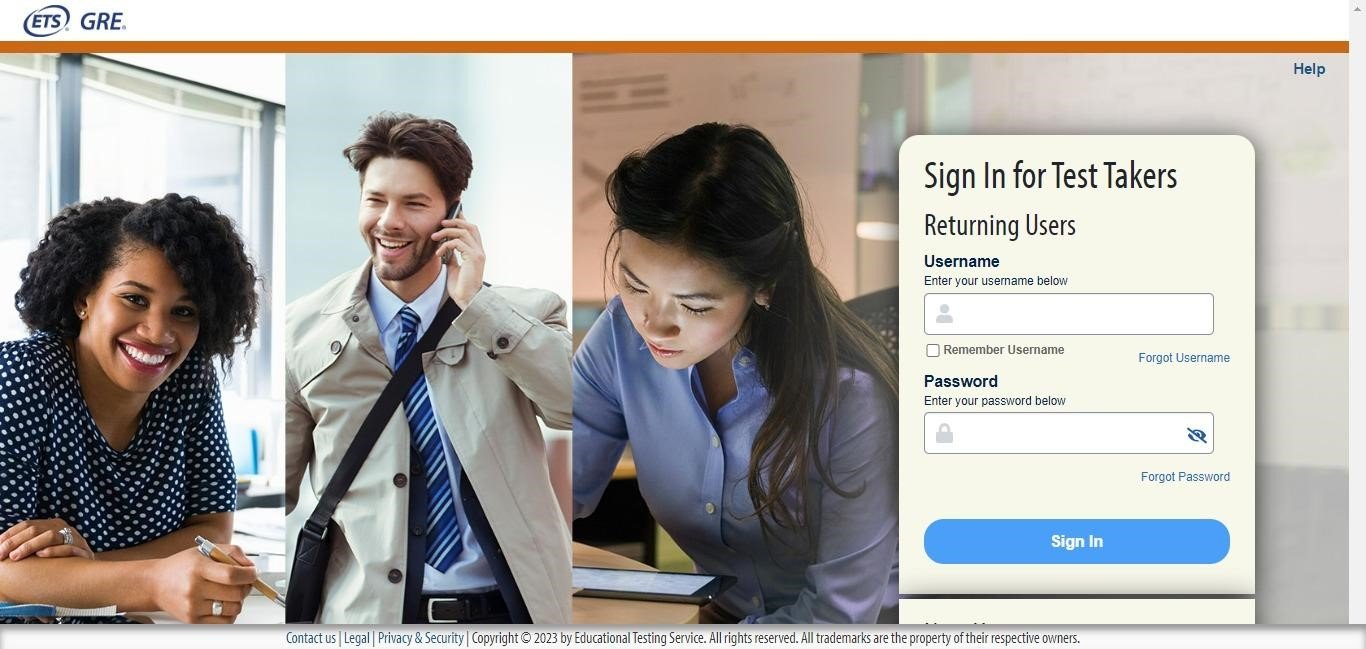
  • The Ultimate Guide to Singapore Student’s Pass for International Students

    An easy guide to follow for securing a student visa to pursue your dream of studying in Singapore

    Singapore has become a highly popular educational destination among international students owing to its high quality of educational offerings, multiculturalism, and bright work prospects.  

    One of the good things about studying in Singapore is the relatively uncomplicated student visa process and  short student visa processing time. In fact, among the more popular study abroad destinations around the world, Singapore has one of the easiest visa procedures. On top of that, it also has a 90% student’s pass application acceptance rate, which means you need not worry much about student visa rejection. 

    However, you still need to go through the visa application process and ensure that you do not make any mistakes while going about your visa application. This guide will give you an insight into the kinds of visa students can apply for, visa eligibility criteria, the application process for obtaining a student visa in Singapore, visa cost and other fees involved, how to cancel the visa, and new updates following COVID. 

    What is a Student’s Pass?

    A Student’s Pass can be described as a document that international students need in order to be able to pursue full time courses, lasting more than 30 days, in Singapore. You would need a Student’s Pass if you plan to study at any of the following categories of educational institutes in Singapore: 

    [wpdatatable id=159]

    Of course, there are certain other categories of institutions as well for which one requires a Student’s Pass, such as Approved Private Educational Institutions, Foreign System Schools and Privately-Funded Schools, Kindergartens and Childcare Centres, and Government/Government-Aided/Independent Schools. However, these are not institutions that one would get into for their degree education. If you apply for degree education in Singapore, you would apply to one of the ITEs or IHLs mentioned above.
    You will need a local sponsor if you are applying for a Student’s Pass to study at one of ITEs. The local sponsor must be a Singapore Citizen (SC) or Permanent Resident (PR) and aged 21 or older. Companies and organizations cannot act as sponsors. This is a special requirement only for students who aspire to study at an ITE. If you have an SC or PR parent or step-parent, he/she must act as the local sponsor of your Student’s Pass application.  
    There are some other types of student visas as well such as:

    Training Work Permit

    Those aspirants who are undergoing a practical training of equal to or less than six months. It is also applicable for semi-skilled international people.  

    Training Employment Pass

    It is applicable for international aspirations who are undergoing practical training and should be earning at least’s $3,000 a month.

    Work Holiday Pass

    As part of the Work Holiday Program, those aspirants who belong to the age group of 18 to 25 years who are seeking an opportunity to work and holiday in Singapore for up to six months.  

    However, if you are someone who is applying for your degree education in a Singaporean educational institute, the type of student visa you will need is the Student’s Pass.

    Documents Required for obtaining Singapore Student’s Pass

    Whether you have gained admission to an ITE or an IHL, the following is what you need to have before you begin your Student’s Pass application: 

    • The Registration Acknowledgement Letter from the school you plan to attend 
    • Your travel document biodata page (first and last page of passport) and birth certificate (if applicable) 
    • Your personal information, which includes the list of places/countries where you have previously resided in, your academic background, employment history, as well as financial support 
    • Your parents’, spouse’s, and/or siblings’ personal information (if applicable) 
    • Residential address and contact details in Singapore 
    • Your email address 
    • Four Recent, passport-sized, digital, color photographs which were taken within the last three months. For photographs, there is a detailed list of guidelines that you need to adhere to

    Step-by-Step Application Process for Singaporean Student’s Pass

    For giving out Student’s Passes, a system has been set in place, called as SOLAR (Student’s Pass Online Application and Registration). The SOLAR is the authoritative department that is responsible for monitoring all the visa related queries and applications that come in.  

    Before you begin applying for the Student’s Pass, you need to obtain a Registration Acknowledgement Letter from the academic institution from where you have got an admit. Usually, you will receive an email which will specify how you can proceed with obtaining a Registration Acknowledgement Letter. After you apply for this letter, you should receive it within a matter of two days. Once you obtain this letter, you can move ahead with the process.  

    The Student’s Pass application process varies slightly depending on whether you have secured admit to an ITE or IHL. This is because, as we have seen before, for ITE, you need a local sponsor for your Student’s Pass.  

    First, we look at the process for Student’s Pass application for ITEs:

    Student’s Pass application process for studying in Institutes of Technical Education

    1. Submitting your Student’s Pass application 

    The first step is to create a new Student’s Pass online application. This is what needs to be done at this stage: 

    2. Go to the following link: 

    [[Student Login – Student’s Pass Application for Studying at ITE]] 

    Login to the link using the unique reference number on your Registration Acknowledgement Letter and complete the application forms: Form 16A (Student’s Details) and Form V103 (Student’s Parents)   

    3. Next, your local sponsor needs to go to the following link: 

    [[Local Sponsor Login]] 

    After logging in to this link, the local sponsor needs to complete the ‘Undertaking by Local Sponsor’ which involves completing and submitting forms V39s and V39Q.  

    4. Fee Payment 

    You will now need to make the fee payment, for which, you need to go to the following link: 

    [[Singapore Student’s Pass Fee Payment]] 

    Student’s Pass application process for studying in Institutes of Higher Learning

     1. Submitting the Student’s Pass Application 

    To submit the Student’s Pass application, a student needs to go on the following link: 

    [[Student Login – Student’s Pass Application for Studying at IHL]]  

     2. Fee Payment 

    Now, you will need to pay the fees on the following link: 

    [[Singapore Student’s Pass Fee Payment]]  

    During the Step 2 of Student’s Pass application process mentioned above for both ITE and IHL, a non-refundable visa fees of $30 (30 Singaporean dollars) has to be made. This payment can be done by: 

    • Visa/Mastercard credit or debit card 
    • American Express (AMEX) credit card 
    • Internet Direct Debit (DBS/ POSB, OCBC, UOB, Standard Chartered Bank internet banking accounts in Singapore) 
    • PayNow  

    From here on, the process is the same for both ITEs and IHLs. If your application thus far is successful, the Immigration and Checkpoints Authority (ICA) will issue you an ‘In-Principle Approval Letter’ (IPA). Now remember, all the procedures that you need to do until you receive the IPA can be done from outside of Singapore.  

    However, once you receive the IPA letter, you will need to complete the remaining procedures for obtaining the Student’s Pass by traveling to Singapore. But before you travel, make sure that you are in a position to meet all the conditions mentioned in the IPA, as it is only then that you will be granted the Student’s Pass. These conditions may include getting a medical check-up done or paying a security deposit. 

    To complete the formalities for the issuance of the Student’s Pass, it is necessary for you to be present in Singapore with a valid immigration pass. If you require a visa to enter Singapore, it will be automatically included in your IPA letter. At the immigration checkpoint, you can enter Singapore by presenting your IPA letter and you will be granted a Visit Pass for a 30-day period. Ideally, you need to complete the formalities for obtaining the Student’s Pass during these 30 days when the Visit Pass is valid. If you fail to do so, you would need to request for an extension of the same to avoid overstaying.  

     3. Acknowledging Terms and Conditions 

    As a precursor to the issuance of your Student’s Pass, you will need to download and acknowledge the following form: 

    [[Student’s Pass Terms and Conditions form]] 

     4. Booking an appointment with Immigration and Checkpoints Authority (ICA) 

    Once you have done all of the above, you need to book an appointment with the ICA, which you can do using the following link: 

    [[Book e-Appointment with ICA]] 

    By visiting the link, you would be able to book a date and time suitable for you. Once you schedule this appointment, you would need to visit the ICA building at that time. The address for the ICA Building is as follows: 

    Visitor Services Centre, ICA Building 

    10 Kallang Road, Level 4,   

    Singapore 208718 

    (Landmark: Next to Lavender MRT station) 

    Upon arriving for the appointment, you can proceed to the Self-Service Ticketing Kiosk for collecting a queue ticket.  

    At this stage, you will need to make the following fee payments: 

    • Visa Issuance Fee (SGD 60)  
    • Multiple Entry Fee (SGD 30) You need to pay this fee if you want to leave and return to Singapore during your academic program 

    Student’s Pass application process for studying in Institutes of Higher Learning

     1. Submitting the Student’s Pass Application 

    To submit the Student’s Pass application, a student needs to go on the following link: 

    [[Student Login – Student’s Pass Application for Studying at IHL]]  

     2. Fee Payment 

    Now, you will need to pay the fees on the following link: 

    [[Singapore Student’s Pass Fee Payment]]  

    During the Step 2 of Student’s Pass application process mentioned above for both ITE and IHL, a non-refundable visa fees of S$30 (30 Singaporean dollars) has to be made. This payment can be done by: 

    • Visa/Mastercard credit or debit card 
    • American Express (AMEX) credit card 
    • Internet Direct Debit (DBS/ POSB, OCBC, UOB, Standard Chartered Bank internet banking accounts in Singapore) 
    • PayNow  

    From here on, the process is the same for both ITEs and IHLs. If your application thus far is successful, the Immigration and Checkpoints Authority (ICA) will issue you an ‘In-Principle Approval Letter’ (IPA). Now remember, all the procedures that you need to do until you receive the IPA can be done from outside of Singapore.  

    However, once you receive the IPA letter, you will need to complete the remaining procedures for obtaining the Student’s Pass by traveling to Singapore. But before you travel, make sure that you are in a position to meet all the conditions mentioned in the IPA, as it is only then that you will be granted the Student’s Pass. These conditions may include getting a medical check-up done or paying a security deposit. 

    To complete the formalities for the issuance of the Student’s Pass, it is necessary for you to be present in Singapore with a valid immigration pass. If you require a visa to enter Singapore, it will be automatically included in your IPA letter. At the immigration checkpoint, you can enter Singapore by presenting your IPA letter and you will be granted a Visit Pass for a 30-day period. Ideally, you need to complete the formalities for obtaining the Student’s Pass during these 30 days when the Visit Pass is valid. If you fail to do so, you would need to request for an extension of the same to avoid overstaying.  

     3. Acknowledging Terms and Conditions 

    As a precursor to the issuance of your Student’s Pass, you will need to download and acknowledge the following form: 

    [[Student’s Pass Terms and Conditions form]] 

     4. Booking an appointment with Immigration and Checkpoints Authority (ICA) 

    Once you have done all of the above, you need to book an appointment with the ICA, which you can do using the following link: 

    [[Book e-Appointment with ICA]] 

    By visiting the link, you would be able to book a date and time suitable for you. Once you schedule this appointment, you would need to visit the ICA building at that time. The address for the ICA Building is as follows: 

    Visitor Services Centre, ICA Building 

    10 Kallang Road, Level 4,   

    Singapore 208718 

    (Landmark: Next to Lavender MRT station) 

    Upon arriving for the appointment, you can proceed to the Self-Service Ticketing Kiosk for collecting a queue ticket.  

    At this stage, you will need to make the following fee payments: 

    • Visa Issuance Fee (SGD 60)  
    • Multiple Entry Fee (SGD 30) You need to pay this fee if you want to leave and return to Singapore during your academic program 

    Issuance of Student’s Pass

    Since February 27, 2023, the issuance of the Student’s Pass in Singapore is now exclusively in digital form. 

    Once the formalities at the ICA Building or school enrolment have been completed, a notification email will be sent to the email address provided in the Student’s Pass application. The email will come from no-reply@file.gov.sg and will contain instructions on how to retrieve the digital Student’s Pass on the FileSG website.  

    You may refer to the following links to retrieve your Student’s Pass: 

    Retrieve STP with Singpass login 

    Retrieve STP without Singpass login 

    How We can Help

    While the Singapore Student’s Pass is relatively simple to apply to and obtain, there are still certain things that you need to get right. This includes planning your finances well, following the process and filling all the Visa forms accurately. We can help you with all of this. Also, in case your Student’s Pass application gets rejected, it isn’t the end of the road for you. After assessing what went wrong in your earlier application, we could help in correcting your mistakes and make a stronger case for yourself in your next attempt.

    FAQs

    The validity period of student pass in Singapore varies depending on the duration of the course of study. Generally, the student pass is valid for the entire duration of the course, up to a maximum of 4 years for undergraduate courses and up to the duration of the course for postgraduate courses. 


    If you need to cease or terminate your studies, you need to cancel your Student’s Pass within 7 days. You can do this online by visiting the following link:  

    [[Cancellation of Student’s Pass]] 

    If you are unable to do the cancellation online, you can do the same in person at the above-mentioned ICA building address between 8:00 am to 4:00 pm on Mondays to Fridays (except public holidays). You would need to submit a fully-filled Student’s Pass Cancellation Form and present your valid travel document.


    In Singapore, there is no specific age limit for student visas. However, applicants are generally expected to be of legal age and have completed their secondary education or equivalent qualifications. The eligibility criteria may vary depending on the educational institution and program of study. It is recommended to check with the respective educational institution or the Singapore immigration authorities for specific requirements regarding age limits for student visa applications. 


    There are several benefits of holding a student visa in Singapore: 

    1. Study Opportunities: With a student visa, you can pursue your chosen academic program at prestigious educational institutions in Singapore, gaining access to high-quality education and a wide range of study options. 
    2. Work Opportunities: The student visa allows you to work part-time during your studies, enabling you to gain practical experience, earn an income, and develop valuable skills that can enhance your career prospects. 
    3. Post-Study Work Visa: Upon completing your studies, Singapore offers various options for post-study work visas, allowing you to stay and work in the country for a certain duration. This provides an opportunity to gain valuable work experience in Singapore’s thriving job market. 
    4. Pathway to Permanent Residency: Singapore offers favorable immigration policies for skilled professionals, and holding a student visa can be a pathway to obtaining permanent residency in the country after meeting certain criteria. 
    5. Multicultural Experience: As an international student in Singapore, you will have the chance to immerse yourself in a multicultural society, interact with people from diverse backgrounds, and expand your global network. 


    If you are a Student’s Pass holder in Singapore and your local address has changed, it is important to follow the necessary steps to update your address with the relevant authorities. Here’s what you should do: 

    1. Report the change of address to the Immigration & Checkpoints Authority (ICA): According to regulation 8(5)(b) of the Immigration Regulations, you are required to report any change in your local address within 14 days after the change of residence. Failing to do so may result in penalties or complications with your Student’s Pass. 
    2. Access the e-Service with Singpass: If you have a valid Singpass account, you can use the e-Service provided by ICA to report the change of address. Log in to your Singpass account and access the e-Service specifically designed for updating your address details. 
    3. Seek assistance from your educational institute or local sponsor: Alternatively, you can approach your educational institute or local sponsor (if applicable) for assistance in updating your address. They may have designated staff or procedures in place to facilitate this process for students. 

    If you prefer to do this offline, here’s what you should do: 

    1. Fill the Change of Address form: If you prefer an offline method, you can download the Change of Address form from your educational institution, complete it accurately, and sign it.  
    2. Send the filled form to the relevant ICA email address: Once you have filled the above form, send the duly filled and signed form via email to the appropriate ICA email address based on your institution type: 
    3. ICA_STP1@ica.gov.sg for pass holders from Institutes of Higher Learning (IHL), Foreign System Schools (FSS), Institutes of Technical Education (ITE), and Government/Government-Aided/Independent Schools (GOV). 
    4. ICA_STP2@ica.gov.sg for pass holders from Approved Private Education Institutions (PEI), Kindergartens, and Childcare Centres (KID). 

    Ensure that you use the subject title “Change of Residential Address for STP” in the email for easier identification by the authorities. 

    By promptly reporting the change of address and updating your records, you can ensure that your Student’s Pass information remains accurate and up to date. 


    If you wish to enter Singapore, you need to comply with certain requirements with regards to Public Health and General Entry rules. You may check the following page to check the latest requirements: 

    Public Health and General Entry requirements


    Yes, as a Student’s Pass holder in Singapore, you are generally allowed to travel outside of Singapore while holding a valid student pass. However, there are a few important points to consider: 

    1. Validity of the Student’s Pass: Ensure that your Student’s Pass is valid during the period of your intended travel. If your student pass is nearing expiration, it is advisable to renew it before making any travel plans. 
    2. Re-entry Permit (REP): If you plan to leave Singapore and return during your course of study, you must ensure that you have a valid Re-entry Permit (REP). The REP allows you to re-enter Singapore without any issues. It is automatically issued upon the approval of your Student’s Pass and is typically valid for the duration of your student pass. 
    3. Return before the course commencement or completion: It is important to plan your travels in such a way that you return to Singapore before the commencement of your course or before it concludes. Missing the start of your course or failing to return for examinations or other academic commitments can have serious consequences. 
    4. Check visa requirements for other countries: If you plan to travel outside Singapore, make sure to check the visa requirements of the countries you intend to visit. Different countries have different visa policies, and you may need to apply for a visa in advance depending on your nationality and the destination. 
    5. Keep important documents with you: When traveling, carry your valid passport, Student’s Pass card or e-copy, and other necessary identification and travel documents. These will be required for immigration checks during departure and re-entry into Singapore. 

    It is always recommended to consult with the Immigration & Checkpoints Authority (ICA) or your educational institution for the most up-to-date information and specific guidelines regarding travel while holding a Student’s Pass in Singapore.


    Overstaying your student pass in Singapore is a violation of immigration regulations and can lead to serious consequences. Here’s what may happen if you overstay your student pass: 

    1. Immigration Offense: Overstaying is considered an immigration offense in Singapore. The Immigration & Checkpoints Authority (ICA) takes violations of immigration regulations seriously. 
    2. Penalties and Fines: If you overstay your student pass, you may be liable for penalties and fines imposed by the authorities. The fines can vary depending on the student visa duration of the overstay and the circumstances of the case. These fines can be substantial and may increase the longer you overstay. 
    3. Future Immigration Issues: Overstaying can have long-term implications for your immigration status and future visits to Singapore. It may affect your ability to obtain visas or passes for Singapore in the future, including employment passes or long-term visit passes. 
    4. Deportation and Ban: In some cases, if you overstay your student pass, you may be subject to deportation from Singapore. Deportation involves being sent back to your home country at your own expense. Additionally, you may face a ban from re-entering Singapore for a specific period, which can vary depending on the severity of the offense. 
    5. Negative Impact on Education: Overstaying can also have negative consequences for your education. Your educational institution may take disciplinary action, including terminating your enrolment or withholding important documents and certifications. 

    To avoid these complications, it is crucial to ensure that you adhere to the terms and conditions of your student pass and leave Singapore before the expiration of your pass. If you have any concerns or need to extend your stay, it is advisable to consult with the Immigration & Checkpoints Authority (ICA) or your educational institution for guidance and assistance.